Bedroom Lighting Ideas
A practical step-by-step guide to bedroom lighting ideas, including preparation, instructions, common issues, tips, and next steps.
Bedroom Lighting Ideas
A well-lit bedroom is more than just a bright room; it's a flexible space that supports both restful nights and productive mornings. This guide helps you move beyond a single, harsh overhead light to a layered lighting scheme that adapts to your needs. We'll walk you through planning your ambient, task, and accent lighting to create a comfortable, functional, and personal retreat. This process is for anyone looking to improve their bedroom's atmosphere and utility, whether you're starting from scratch or upgrading an existing space.
Fast Answer
- Core Principle: Layer your lighting.
- Primary Layers: Combine general (ambient), focused (task), and decorative (accent) lights.
- Key Control: Install dimmers on all main light sources for maximum flexibility.
- Best Bulb Color: Choose warm white bulbs (2700K–3000K) for a relaxing feel.
Before You Start
Proper planning is the most important part of getting your bedroom lighting right. Before you purchase any fixtures or bulbs, gather these simple tools and take stock of your space. This preparation will save you time and help you create a cohesive, effective plan.
- Measuring Tape: To measure your room dimensions, ceiling height, and furniture placement.
- Notebook and Pencil: To sketch a simple floor plan and jot down ideas and measurements.
- List of Activities: Make a list of everything you do in your bedroom (e.g., reading, dressing, watching TV, working).
- Existing Outlet Map: Note the location of all current electrical outlets and light switches.
Step-by-Step Instructions
Assess Your Needs and Activities
The first step is to think about how you use your bedroom. A lighting plan should be built around your life, not just the room's dimensions. Make a list of all the activities that happen in the space. Be specific.
Do you read in bed? You'll need focused task lighting there. Do you have a vanity or dressing area? That space requires bright, clear light to help you get ready. Do you have artwork or architectural features you'd like to highlight? That's a job for accent lighting. Thinking through your daily and nightly routines will reveal exactly where you need light and what kind of light you need.
Learn the Three Layers of Lighting
Professional lighting design is built on a simple concept: layering. Combining three distinct types of light creates a balanced, versatile, and inviting room. Your goal is to incorporate all three layers into your plan.
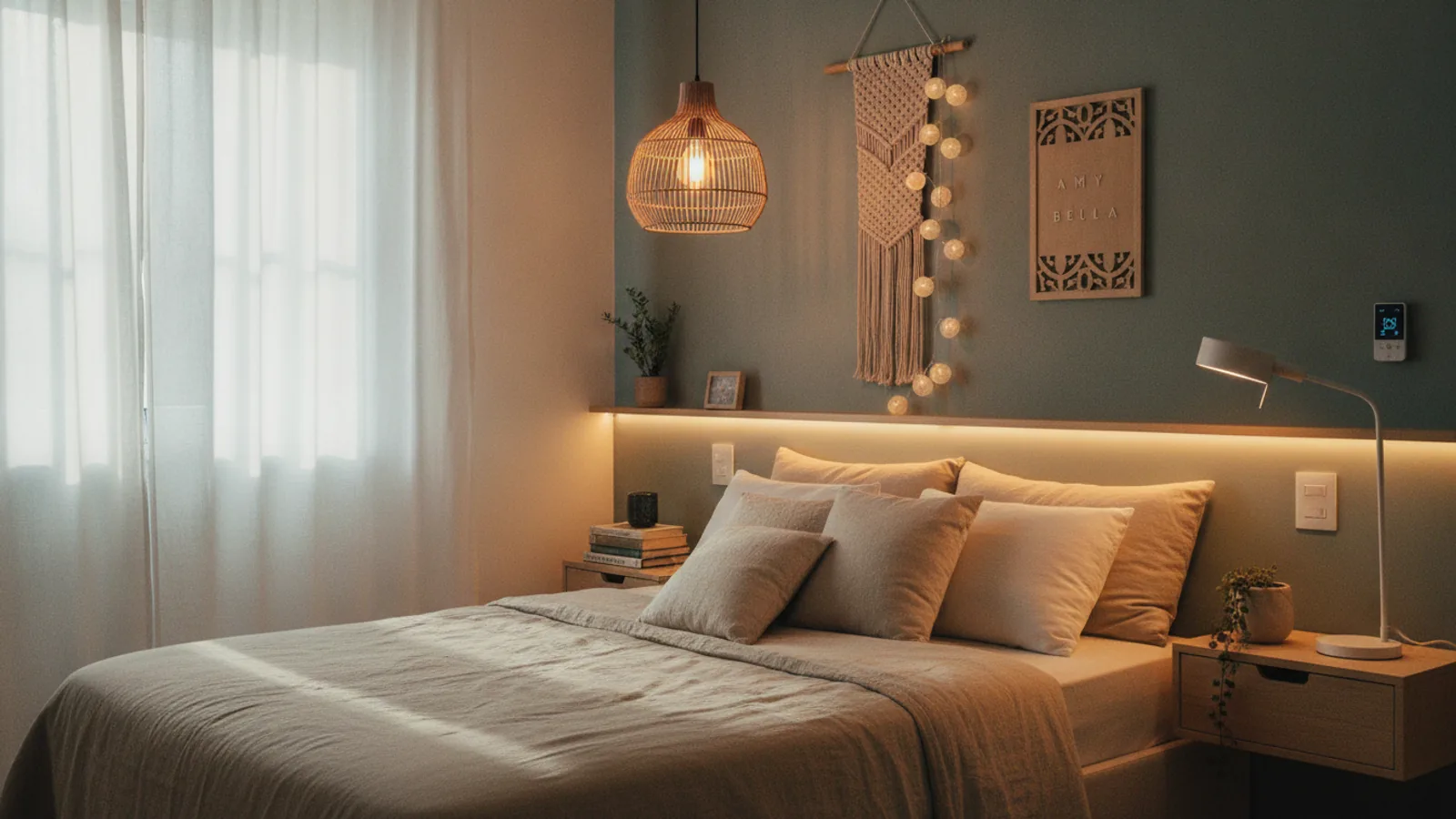
- Ambient Light: This is the overall, general illumination that fills the room. It's your primary light source, allowing you to see and walk around safely. Examples include a central ceiling fixture, recessed lights (can lights), or cove lighting.
- Task Light: This is focused, brighter light for specific activities. It reduces eye strain and helps you perform detailed jobs. Examples are bedside lamps for reading, a desk lamp for working, or sconces by a mirror.
- Accent Light: This is directional light used to draw attention to specific objects or features, adding depth and style. Think of a spotlight on a piece of art, an uplight behind a plant, or LED strips under a bed frame.
Start with the Ambient Layer
Your ambient lighting is the foundation of the room's light. Its job is to provide a comfortable level of brightness without glare. The most common source is a central fixture on the ceiling. For ceilings under 9 feet, a flush-mount or semi-flush-mount fixture is a great choice as it saves headroom. For taller ceilings, a pendant light or chandelier can add a dramatic focal point.
If you prefer a more modern look, recessed lights can provide clean, even illumination. However, be careful to space them correctly and always use a dimmer switch. A grid of recessed lights alone can make a bedroom feel like an office; they work best when supplemented by other light sources.
Add Focused Task Lighting
Now, add light where you need it most for specific activities. The most important task area in a bedroom is typically the bedside. Each side of the bed should have its own light source, controlled independently.
- Bedside Lamps: The classic choice. They add symmetry and are easy to install. Ensure the bottom of the shade is roughly at your eye level when you're sitting up in bed to avoid glare.
- Wall Sconces: These are perfect for smaller rooms as they free up space on your nightstand. They can be hardwired for a clean look or come in plug-in versions for easier installation.
- Pendant Lights: Hanging low pendants on either side of the bed adds a modern, decorative touch while also saving surface space.
Don't forget other task areas. If you have a reading chair, place a floor lamp beside it. For a closet, consider installing an integrated LED strip or a dedicated small ceiling fixture to make finding clothes easier.
Incorporate Accent Lighting
The final layer is accent lighting, which adds personality and visual interest. This is where you can be creative. Accent lighting isn't about illuminating the whole room; it's about creating focal points and a gentle, indirect glow.
Consider a picture light mounted above a favorite piece of art. Place a small can uplight on the floor behind a large plant to create dramatic shadows on the ceiling. For a modern, hotel-like feel, install LED strip lighting behind your headboard or under the bed frame. This creates a soft, floating effect that's perfect for winding down at night.
Select Bulbs and Color Temperature
The type of light bulb you choose has a huge impact on the feel of your room. Pay attention to two key metrics: lumens and color temperature (Kelvin).
- Lumens (Brightness): This measures the amount of light produced. For general bedroom ambient lighting, aim for around 20 lumens per square foot. A 10' x 12' room (120 sq ft) would need about 2,400 lumens total. Task lighting should be more concentrated, around 400-500 lumens for a reading lamp.
- Color Temperature (Kelvin): This describes the color of the light, from warm to cool. For a bedroom, you want a cozy, relaxing atmosphere. Stick with bulbs in the 2700K to 3000K range, often labeled "Warm White" or "Soft White." Avoid anything over 4000K, which can feel sterile and disruptive to sleep.
Integrate Dimmers for Full Control
If there is one non-negotiable element in a bedroom lighting plan, it is the dimmer switch. Dimmers are essential for giving you control over the room's mood. They allow your ambient light to go from bright and clean for daytime tasks to low and warm for relaxing before sleep.
Install dimmers on your main ambient light source and, if possible, on your bedside sconces. This versatility is the key to making a layered lighting plan truly work. When purchasing dimmers, make sure they are compatible with your light bulbs, especially if you are using LEDs, which require specific LED-compatible dimmers to prevent flickering or buzzing.
Draw a Simple Lighting Plan
Before making any final decisions, pull all your ideas together into a simple sketch. Draw a basic outline of your bedroom, including the location of the bed, windows, doors, and other major furniture.
Using simple symbols, mark where each light fixture will go. Use a 'C' for a ceiling fixture, 'S' for a sconce, 'L' for a lamp, and 'R' for recessed lights. Note which lights will be connected to which switch and which will be on dimmers. This visual plan will help you spot any potential issues, confirm that your layers work together, and serve as a clear guide for your electrician if you are having fixtures professionally installed.
Quick Reference
| Situation | Use this | Why |
|---|---|---|
| Getting Dressed | Bright closet light or vertical sconces by a mirror | Provides clear, shadow-free light for seeing clothes and colors accurately. |
| Reading in Bed | Adjustable sconce or bedside lamp with a shade | Directs light onto your book without creating glare or disturbing a sleeping partner. |
| Creating a Relaxing Mood | Dimmed ambient lights or accent lights only | Low, indirect light signals the brain to wind down and prepare for sleep. |
| Making a Small Room Feel Bigger | Wall sconces and uplights in corners | Frees up floor space and draws the eye upward, creating a sense of height. |
| General Cleaning | All lights on, at full brightness | Maximizes visibility to ensure you don't miss any dust or dirt. |
Common Problems When Planning Bedroom Lighting
Problem: The room has only one harsh overhead light.
This is the most common issue, creating a flat, uninviting space with harsh shadows. The single source is either too bright or too dim, with no middle ground.
Solution: The best fix is to introduce layers. If you can't hire an electrician, start by adding plug-in options. Place a floor lamp in a dark corner and add lamps to your nightstands and dresser. Using smart bulbs in these lamps can give you dimming and color control through an app or voice assistant.
Problem: The light feels cold, sterile, or like an office.
This is almost always caused by the color temperature of your light bulbs. Bulbs labeled "Daylight" or "Cool White" (4000K and higher) emit a blue-toned light that can feel clinical and suppress melatonin production, making it harder to fall asleep.
Solution: Check your bulbs. Replace any cool-toned bulbs with ones in the 2700K ("Warm White") range. This simple, inexpensive swap will instantly make the room feel warmer and more inviting.
Problem: Light switches are in inconvenient locations.
Having to get out of a warm bed to turn off the main light is a classic design flaw. Or perhaps the only switch is hidden behind the bedroom door.
Solution: Smart lighting is the easiest modern solution. Replace your main bulbs with smart bulbs, which can be controlled from your phone or a small remote you can keep on your nightstand. A smart plug can also add this control to any standard lamp. For a permanent fix, an electrician can move switches or install a three-way switch by your bed.
Advanced Tips for Bedroom Lighting Ideas
Automate with Smart Lighting Scenes
Take smart lighting a step further by creating "scenes." A "Good Morning" scene could slowly brighten your lights over 15 minutes to simulate a sunrise. A "Wind Down" scene could automatically dim all lights to a warm 30% brightness at 10 PM. A "Movie" scene could turn off the main lights and activate a soft glow from LED strips. This level of automation adds a touch of luxury and helps regulate your sleep cycle.
Use Hidden Light Sources for an Architectural Glow
The most sophisticated lighting often comes from sources you can't see. Consider installing LED tape lighting in unconventional places. Run a strip along the top of a bookshelf to wash the ceiling with a soft glow (cove lighting). Place them behind a large headboard to create a beautiful backlit halo. This technique of indirect lighting eliminates glare and adds a high-end, custom-designed feel to the room.
Think Vertically to Enhance Room Height
Use light to change the perceived dimensions of your room. Placing a simple uplight can or a torch-style floor lamp in a corner will draw the eye upward, making the ceiling feel higher. Similarly, hanging pendants with a narrow downward beam over nightstands can emphasize vertical space, making the area around the bed feel more spacious and intentional.
Bedroom Lighting Ideas FAQ
How bright should a bedroom be?
It depends on the layer. For general ambient light, aim for 10-20 lumens per square foot. For task lighting like reading, you'll want a more focused source of 400-500 lumens. The key is flexibility; use dimmers to adjust the overall brightness from very low for relaxation to fully bright for cleaning or getting ready.
Are recessed lights a good idea for a bedroom?
Yes, but with caution. Recessed lights are excellent for providing smooth, even ambient light. However, they should always be on a dimmer and should not be the only light source. A room with only recessed lights can feel impersonal. Use them as your foundation, then add lamps and sconces to create warmth and character.
What is the correct height for bedside sconces?
A good rule of thumb is to mount the sconce so the bottom of the shade is about 24-30 inches above the top of your mattress. When you're sitting up in bed, the light source should be just above shoulder height, allowing light to fall on your book without shining directly into your eyes. Always check the position before installation.
Can I mix different metal finishes on my light fixtures?
Absolutely. Mixing metals adds a curated, designer look. The key is to be intentional. A good strategy is to choose one dominant metal (like brushed nickel) for your main fixtures and introduce a second, contrasting metal (like matte black or soft brass) as an accent on a smaller lamp or picture light. Repeating each finish at least once helps the look feel cohesive rather than accidental.
Final Checklist for Bedroom Lighting Ideas
Use this checklist to confirm you've covered all the bases in your plan. A little bit of thoughtful preparation ensures a result you'll enjoy every night and every morning.
- You have made a list of all activities performed in the bedroom.
- Your plan includes sources for all three layers of light: ambient, task, and accent.
- You have chosen bulbs with a warm color temperature (2700K–3000K).
- All primary light sources are planned with compatible dimmer switches.
- You have considered the scale and proportion of fixtures relative to your room and furniture.
- You have sketched a simple floor plan marking the location of each light.
- You have a plan to consult a licensed electrician for any hardwired installations.