Home Office Colour Ideas
A practical step-by-step guide to home office colour ideas, including preparation, instructions, common issues, tips, and next steps.
Home Office Colour Ideas
This guide explains how to approach home office colour ideas, including the preparation, practical steps, common mistakes, and final checks that help you finish with confidence.
Before You Start
Step-by-Step Instructions
Quick Reference
Common Problems When Choosing Home Office Colour Ideas
Problem: Choosing a colour from a tiny swatch only.
Fix: Small paint chips can be misleading. They don't show how the colour will look across a large area, especially when light hits it. Always purchase sample pots and paint at least 2x2 foot squares on your actual walls. This gives you a much better sense of the colour's true appearance and intensity.
Problem: Forgetting to consider the room's lighting.
Fix: Colours appear differently under natural daylight versus artificial light, and depending on which direction your windows face. Observe your painted samples at different times of day—morning, midday, and evening—and with both natural and artificial lights on. This helps prevent surprises once the entire room is painted.
Problem: Ignoring existing furniture and decor.
Fix: Your new wall colour should complement, not clash with, your existing items like desks, chairs, rugs, and curtains. Before deciding, place your paint samples next to your largest pieces of furniture or fabric items to ensure they create a harmonious look together. If you're keeping a patterned rug, choose a wall colour that picks up one of its subtle tones.
Problem: Rushing the decision process.
Fix: Choosing home office colour ideas is a significant decision for a space you'll spend a lot of time in. Don't feel pressured to decide quickly. Leave your sample patches on the wall for several days, even a week, if you need to. Living with the colours for a while allows you to truly evaluate how they make you feel and if they align with your work goals.
Problem: Feeling overwhelmed by too many choices.
Fix: Start by narrowing down to 2-3 main colour families based on your desired mood (e.g., calming blues/greens or energetic yellows/oranges). Then, within those families, choose 3-5 specific shades to sample. If a colour doesn't immediately feel right, eliminate it. Sometimes, limiting your options helps clarify what you truly prefer.
Advanced Tips for Home Office Colour Ideas
Use an Accent Wall Strategically
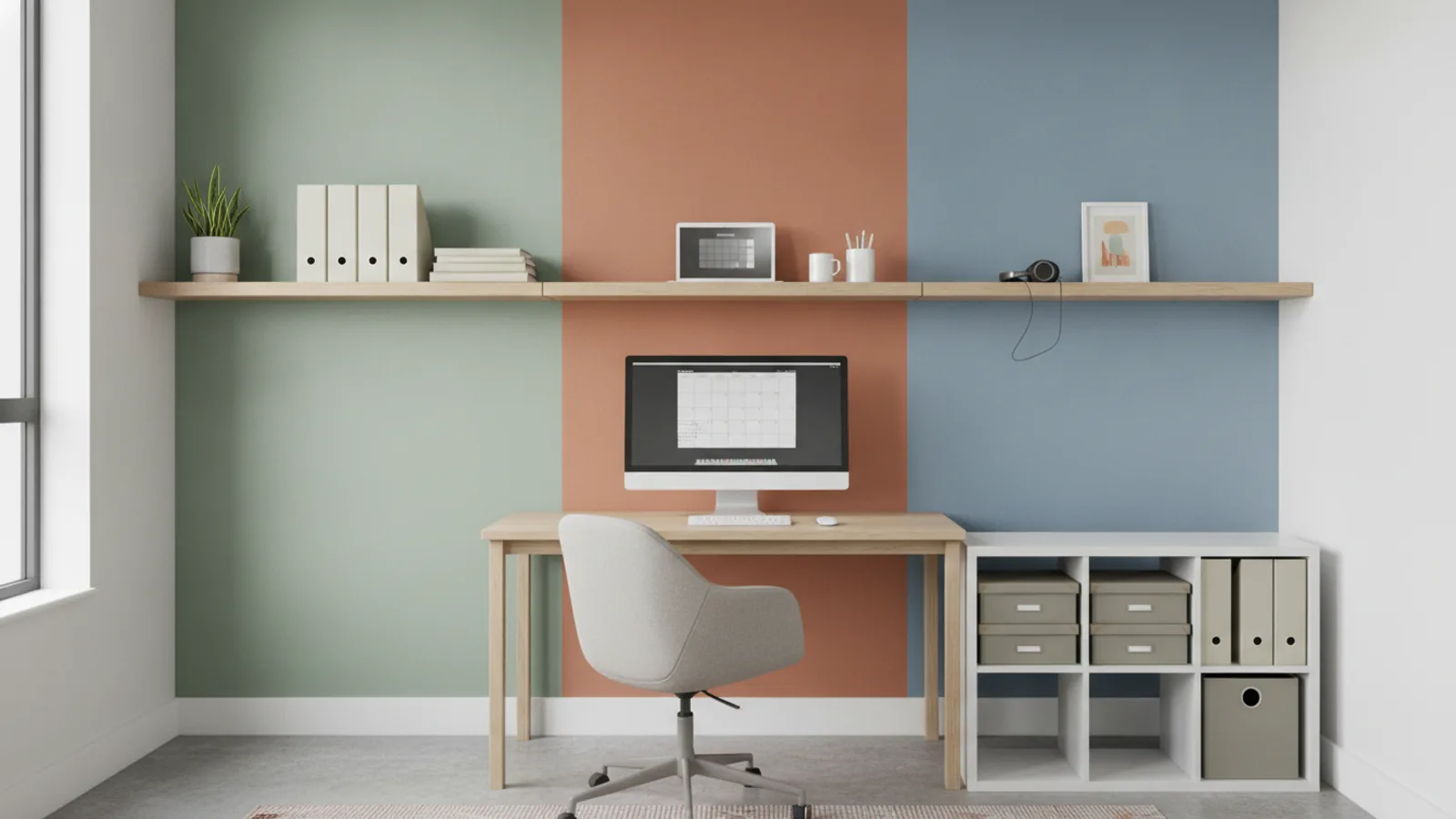
Instead of painting all walls one solid colour, consider painting just one wall a bolder or darker shade. This accent wall can be the wall behind your desk, drawing attention to your workspace, or it could be a wall with a window to frame a view. Accent walls add depth and a focal point without making the entire room feel too dark or overwhelming. Choose an accent colour that complements your main wall colour, perhaps a deeper shade of the same hue or a complementary colour for a pop.
Incorporate Texture with Wallpaper or Fabric
Colour isn't just about paint; texture also plays a huge role in how a room feels. Consider using a textured wallpaper on an accent wall for visual interest – perhaps a subtle grasscloth, a geometric pattern, or even a mural. If wallpaper isn't an option, introduce texture through fabrics like velvet curtains, a boucle chair, or a woven rug. These elements add warmth, sophistication, and another layer to your home office colour ideas beyond just flat paint.
Don't Forget the Ceiling
The ceiling is often called the "fifth wall," and painting it can dramatically change the feel of a room. While a classic white ceiling is always safe, consider painting it a very pale tint of your wall colour for a seamless, enveloping feel. In rooms with high ceilings, a slightly darker shade on the ceiling can make the room feel cozier. For a truly unique look, consider a very soft, reflective metallic paint on the ceiling to bounce light around.
Layer Different Shades of the Same Colour
To create a sophisticated and cohesive look, choose one main colour and then use lighter and darker shades of that same colour throughout your office. For example, if your walls are a light sage green, you might have a deeper forest green chair and pale mint accessories. This monochromatic approach creates visual interest and depth without introducing new colours, resulting in a very calm and elegant space that keeps your home office colour ideas focused.
Define Zones with Paint in Multi-Purpose Rooms
If your home office shares space with another function (like a guest room or living area), use paint to visually separate the zones. You could paint the "office corner" a different, complementary colour, or use a bold stripe or geometric pattern on the wall specific to the work area. Another idea is to paint the walls of the work zone a darker shade to delineate it from the rest of the room. This trick clearly defines your workspace even within an open-concept layout.
Home Office Colour Ideas FAQ
Q: What's the best colour for focus and productivity?
A: Many experts suggest blues and greens for focus and productivity. Light to medium shades of blue are calming and help with concentration, while greens are associated with balance and reducing eye strain. Avoid overly bright or dark shades if you need sustained focus.
Q: Can I use dark colours in a small home office?
A: Yes, you can! While light colours traditionally make small rooms feel larger, dark colours can create a cozy, intimate, and sophisticated "jewel box" effect. Just be sure to balance them with plenty of light-coloured furniture, reflective surfaces (like a mirror), and good lighting to prevent the room from feeling too dim or claustrophobic. Consider using a dark colour on just one accent wall.
Q: How do I choose an accent colour for my office?
A: An accent colour should complement your main wall colour. You can choose a colour that is complementary (opposite on the colour wheel, like blue with a touch of orange) for a dynamic look, or an analogous colour (next to your main colour on the colour wheel, like green with a touch of blue) for a harmonious feel. You can also pick an accent colour from a pattern in your rug or artwork. Aim for 10% of your room's colour palette to be the accent.
Q: How long should I test paint samples on my walls?
A: It's recommended to test paint samples for at least 2-3 days. This allows you to observe the colours under different lighting conditions throughout the day and night. Pay attention to how the colour shifts and how it makes you feel over this period before making a final decision.
Q: Should I paint my home office ceiling?
A: Painting your ceiling can definitely enhance your home office colour ideas. A classic white ceiling is always an option, but for a more integrated feel, consider painting it a very light tint of your wall colour. This creates a seamless transition and can make a room feel more enveloping. For a very tall room, a slightly darker ceiling colour can make the space feel cozier and more grounded.
Final Checklist for Home Office Colour Ideas
Before you commit to painting, run through this checklist to ensure you've considered all the key elements: